
English| EUR
Suggested for you
More currencies
Choose a language
The ghats welcome boats from pre-dawn through evening, but the river's character shifts with each hour. Morning departures catch pilgrims bathing at sunrise, while twilight rides align with the flame ceremony at Dashashwamedh Ghat.
Quick answer
Boats operate daily from 05:00 to 20:00 along the Varanasi ghats, with no entrance fee to access the riverfront. The most rewarding departure windows are 05:00–07:00 for sunrise rituals and 18:00–19:00 for the evening Ganga Aarti, when hundreds of oil lamps illuminate the stone steps and priests perform synchronized offerings. Mid-day departures see fewer ceremonies but clearer views of the ghats' architecture.
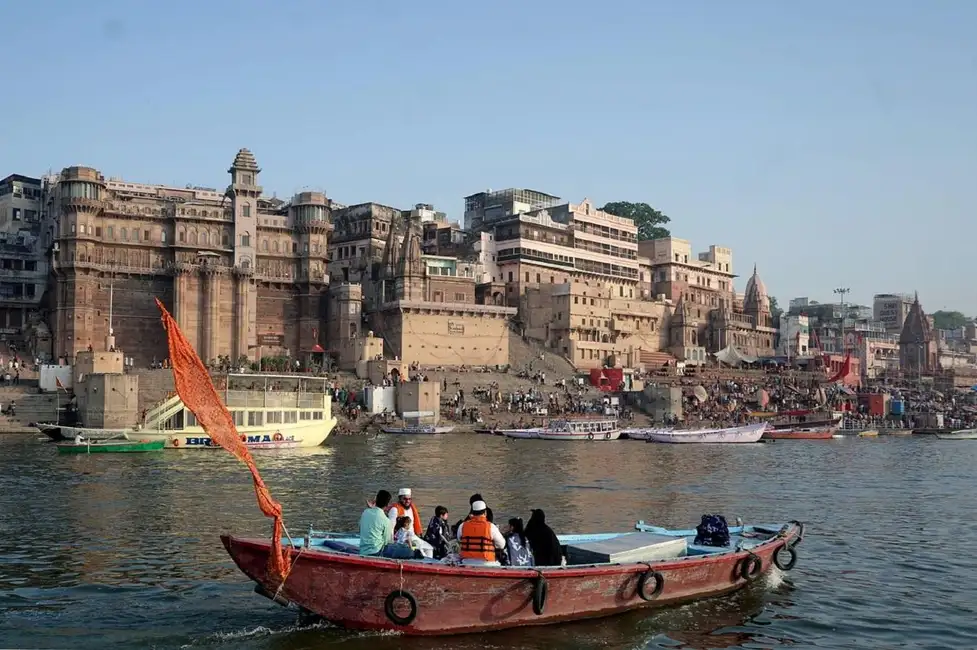
The Ganges in Varanasi moves through eighty-four ghats, each a stone amphitheater descending to water that Hindus regard as a passage between worlds. Boats here are not sightseeing vessels in the Western sense—they are mobile vantage points for observing one of the oldest continuously inhabited pilgrimage circuits on Earth. The boat ride in Varanasi timing matters because the river's human theater unfolds on a strict devotional clock. Morning departures between 05:00 and 07:00 coincide with the holy bath ritual. Pilgrims wade into the current at Assi, Kedar, and Manikarnika ghats, submerging three times while facing east toward the rising sun. Wooden rowboats cluster near the burning ghat at Manikarnika, where cremation pyres have burned without pause for three millennia. The smoke rises vertical in still dawn air. By 09:00 the priests have completed their offerings and the ghats fill with laundry workers and children. Evening boat schedules revolve around the Ganga Aarti at Dashashwamedh Ghat, a synchronized fire offering performed nightly at sunset. Boats position themselves offshore twenty minutes before the ceremony begins, forming a crescent of viewers. Seven priests on tiered platforms swing brass lamps in arcing patterns while devotional songs echo from loudspeakers. The entire ritual lasts forty-five minutes. Departure timing for this spectacle requires arriving at the ghat between 18:00 and 18:30 to secure a boat and claim position before the crowd thickens. Boatmen at each ghat operate independently with flexible pricing structures. A one-hour sunrise tour typically covers twelve to fifteen ghats. The optimal Varanasi ghat boat schedule depends on which ceremonies matter most—cremation rites are constant throughout daylight hours, but morning ablutions and evening fire offerings have fixed windows. October through March brings cooler air and clearer light, though the river remains navigable year-round. The boat ride in Varanasi timing guide becomes essential because missing the 05:00 launch means missing the bathers, and arriving after 18:45 leaves you watching the Aarti from a distance through a forest of other boats.
“The river's human theater unfolds on a strict devotional clock, with each hour revealing a different stratum of ritual life.”
Boat rides on the Ganges River in Varanasi operate daily throughout the week. Services are consistently available from early morning until evening to accommodate visitors.
The best arrival window for a boat ride is 05:00–19:00, allowing visitors to witness either the quiet morning sunrise rituals or the evening Ganga Aarti ceremonies. Aligning your trip with these specific hours ensures the most significant cultural experience on the Ganges River.
Cool, 10°C–25°C. Pleasant for extended river outings.
Hot, 30°C–45°C. Early morning is necessary to avoid heat.
Humid, 25°C–35°C. Periodic monsoon rains may impact schedules.
—
Best for experiencing sunrise prayers and fewer crowds.
Verdict: The best slot is October to March, arriving at 05:00 for the sunrise rituals.
A well-paced visit combines a one-hour boat ride with ghat exploration, best planned around sunrise or evening ceremonies. This itinerary balances river views with on-foot discovery of the ghats' spiritual activities.
Begin with a one-hour boat ride departing near Dashashwamedh Ghat to witness the Ganges awakening and morning rituals along the riverbanks. Book your boat the evening before or arrive 15 minutes early to negotiate.
Disembark and walk north to Manikarnika, Varanasi's main cremation ghat, observing the ancient funeral rites from a respectful distance. Spend 20–30 minutes here before the mid-morning heat builds.
Head south to Assi Ghat, where locals gather for yoga and morning baths; the walk takes 15 minutes by rickshaw or 40 minutes on foot along the ghats. Stop for chai at a riverside café.
Walk inland to the Kashi Vishwanath Temple complex, a 10-minute walk from the main ghats, to complete your spiritual circuit. Non-Hindus can view the exterior and explore the surrounding lanes of the old city.
Return for an evening boat ride positioned 50 meters offshore from Dashashwamedh Ghat, where the Ganga Aarti ceremony begins at 19:00. Arrive 30 minutes early to secure a clear view as boats fill quickly.
Access to the ghats along the Ganges River is free of charge. Boat rides are independent services, and fees are negotiated directly with boat operators based on the duration and type of vessel.
Verdict: While ghat access is 0 INR, visitors typically pay variable fees for boat services, which fluctuate based on individual negotiation and travel duration.
The Ganges River ghats are located along the eastern edge of Varanasi, Uttar Pradesh. Accessing the riverfront requires navigating the narrow alleyways of the old city to reach the primary boarding points.
Drive to Godowlia Crossing and proceed on foot to Dashashwamedh Ghat
Follow signs through the old city lanes toward the riverfront
Travel to the nearest ghat access road such as Raj Ghat or Dashashwamedh
Alighting at Godowlia Crossing is the most practical choice, as vehicles cannot reach the immediate riverbank; allow extra time to walk the final stretch through the pedestrian-only lanes to reach the ghats.
The Ganges is sacred to millions of Hindus, and the ghats host daily worship. Visitors should demonstrate respect for ongoing rituals, maintain cleanliness, and follow cultural norms around dress and behavior.
Everything you need to know about boat ride in varanasi timing
The best boat ride in Varanasi timing for witnessing sunrise is between 05:00 and 07:00, when the morning rituals begin along the riverfront. Arriving early ensures you can secure a vessel before the peak morning crowds gather.
Yes, boat services operate daily from 05:00–20:00 along the Ganges River Ghats. These hours allow for flexibility whether you prefer a midday excursion or an evening journey.
The evening Ganga Aarti ceremonies typically take place around sunset, so planning your boat ride in Varanasi timing accordingly allows you to watch the rituals from the water. Positioning your boat near Dashashwamedh Ghat provides an ideal vantage point for the ceremony.
There is no single fixed boat ride in Varanasi timing as it is an individual service provided by local boatmen. Visitors generally coordinate their preferred departure window directly at the ghats within the 05:00–20:00 operational range.
The Ganges River Ghats are accessible during the standard 05:00–20:00 window, and most boatmen operate within these established hours. You should plan your itinerary to coincide with the daylight or early evening hours for the best experience.
While the 05:00–20:00 operational window remains the standard, high water levels during the monsoon may impact the availability of some riverfront access points. Always check local conditions at the ghats if you are visiting during the rainy season.
Boat Ride Cost and Pricing
Read more GuideHow to Book a Boat Ride
Read more GuideBest Time for a Boat Ride
Read more GuideBoat Ride Starting Points
Read more Tickets & toursGanga Aarti Boat Ride
Read more Tickets & toursSunrise Boat Ride
Read more Tickets & toursPrivate Boat Hire
Read more